If a number called you and it felt off, tell us what happened. Your report joins the community record and warns whoever they call next. It takes a few seconds and needs no login.
Tell us about the call
The number and the type of call are enough. A sentence about what was said is worth more than a category on its own, because it is what the next person reads. Do not include your own name, account numbers or anything a scammer asked you for — the report is public.
What happens to your report
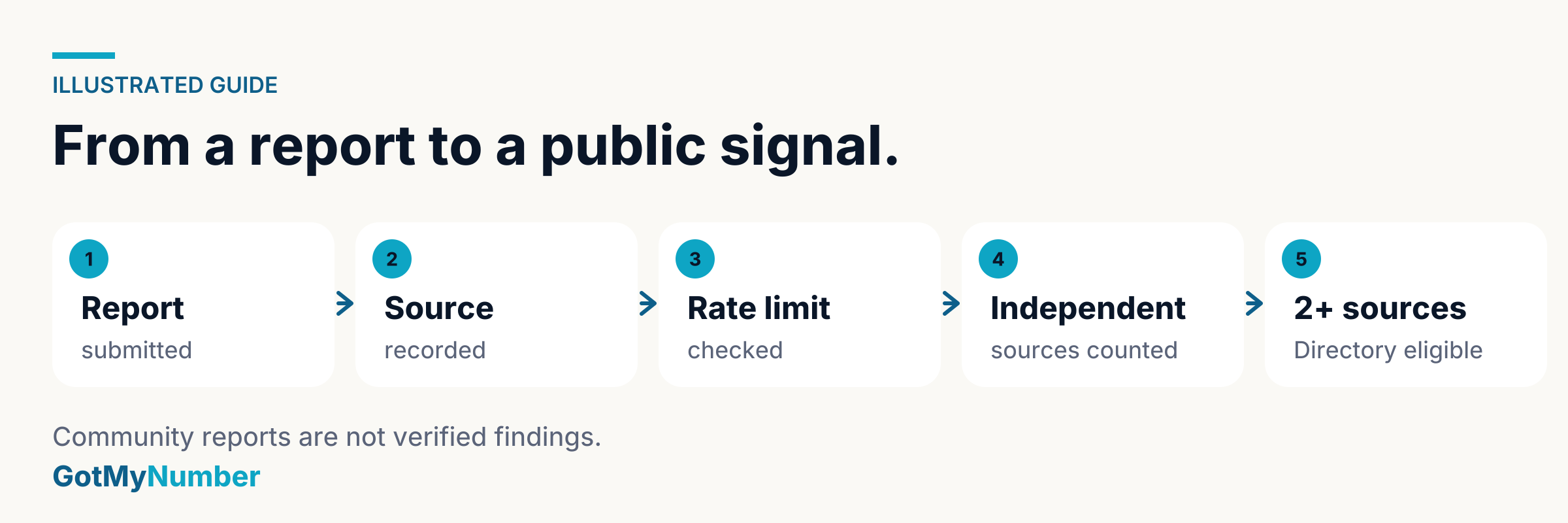
A report shows on that number’s page straight away. The number only joins our public list of scam numbers once reports come from at least two different networks an hour or more apart, or from three networks, which is what stops one person deciding a number is a scam on their own.
How reporting works, step by step
We check the number. It has to be a UK number. Anything else is turned away before it is saved, and the form tells you why.
We note where the report came from, without keeping your address. Our server reads the internet address the report arrives from and stores a scrambled, one-way version of it, never the address itself. That is how we accept one report per number from each source every 24 hours. If we cannot see where a report came from, as can happen on some VPNs and private relays, we cannot accept it.
It shows on the number’s page. Straight away, counted by person rather than by how many times the button was pressed. The number also appears in the list of reported numbers on its area code page.
It joins the scam list only with support from elsewhere. Our list of numbers several people have reported needs reports from at least two different networks an hour or more apart, or from three networks. Reports marked Legitimate never count towards it.
What we don’t do. We don’t contact the number, trace the caller or pass your report to the police. If you lost money or shared bank details, call your bank first, then Report Fraud (England, Wales and Northern Ireland) or Police Scotland on 101. Forward scam texts to 7726.